On March 16 in Sejong City, HOAVAVA and the Bom Foundation officially signed a Memorandum of Understanding (MOU) to support victims of Agent Orange, marking a significant milestone in humanitarian cooperation between the two organizations. The event took place alongside a policy forum attended by representatives from Vietnam and South Korea, focusing on medical solutions, rehabilitation programs, and long-term cooperation strategies for victims.
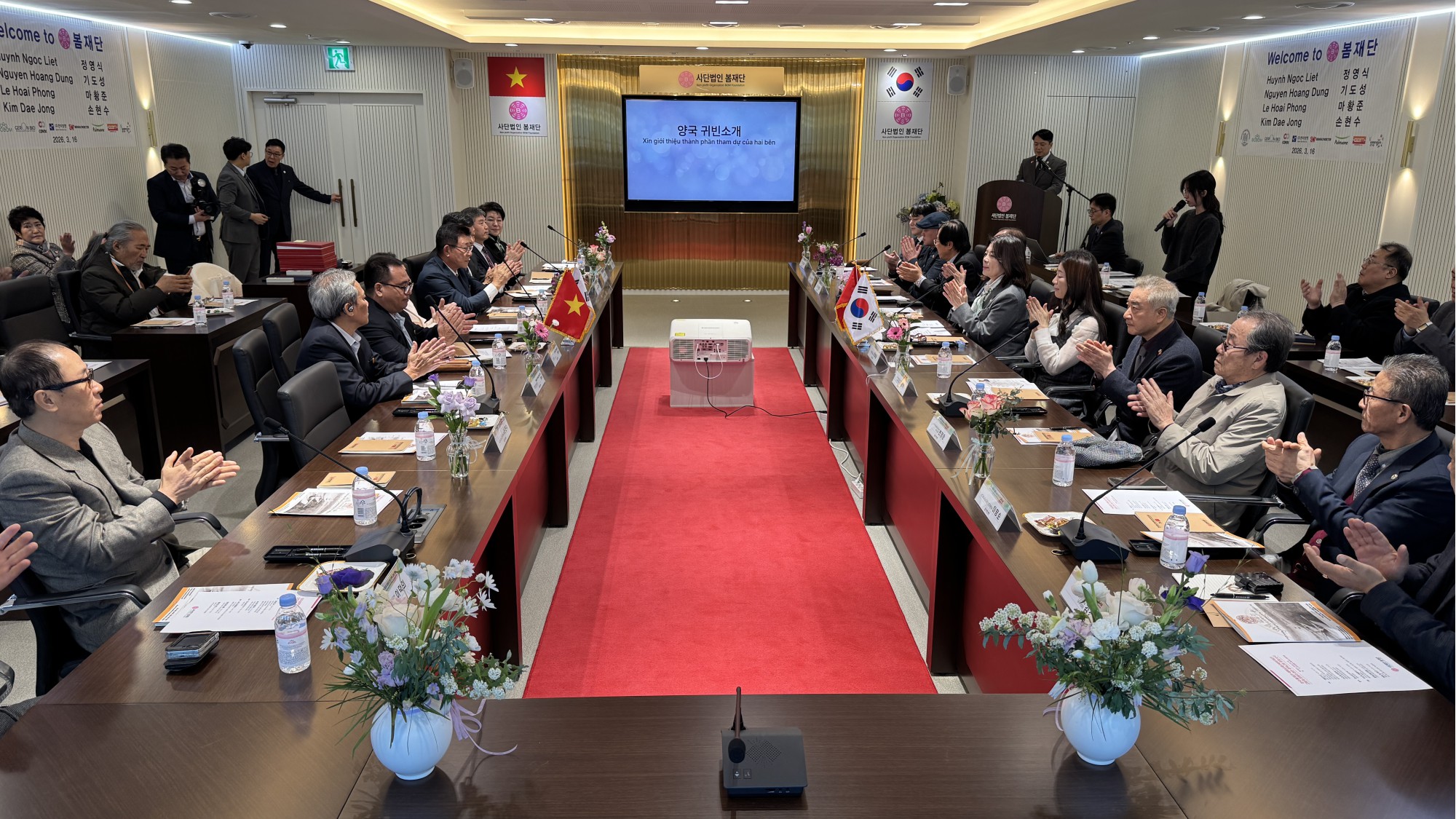
On the HOAVAVA side, Chairman Kim Dae Jong, along with department heads Jung Young Sik, Son Hyun Soo, and Ma Hwang Jun, traveled to South Korea and joined HOAVAVA representatives based in Korea to attend the forum and conduct the signing ceremony. Notably, the delegation arranged the trip at their own expense, demonstrating strong commitment and responsibility in advancing support activities for Agent Orange victims. The signing ceremony was held at the headquarters of the Bom Foundation under Korea’s Ministry of Patriots and Veterans Affairs, establishing an official foundation for cooperation between the two organizations in a new phase.
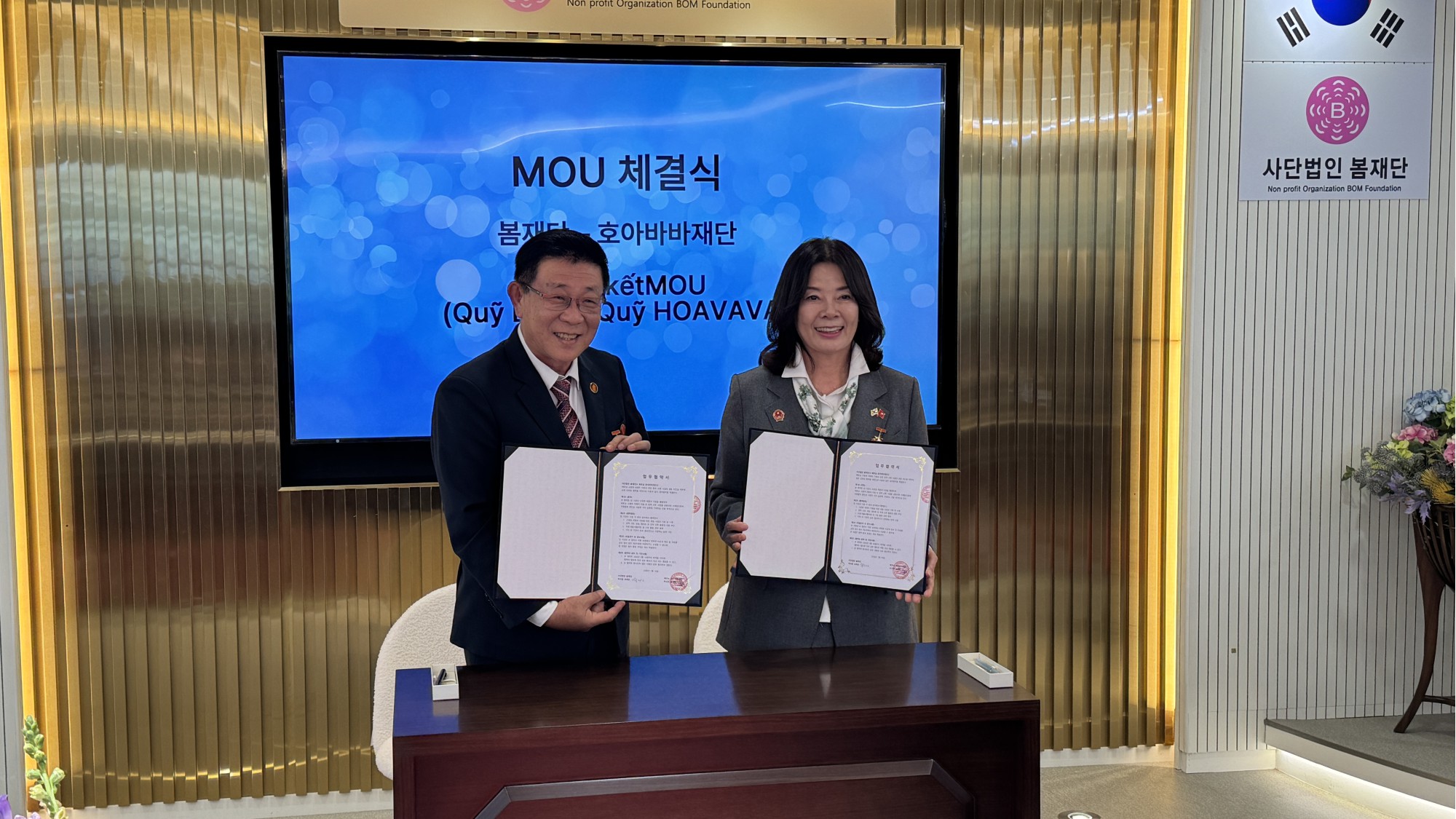
Under the agreement, both parties will collaborate on various initiatives, including medical treatment support, development of rehabilitation programs, policy exchange, and expansion of international funding networks. This partnership goes beyond individual humanitarian efforts, aiming to build a comprehensive, sustainable, and long-term support system that improves access to healthcare and enhances the quality of life for victims.
During the policy forum, participants discussed the current medical and social challenges faced by Agent Orange victims, emphasizing the long-lasting and intergenerational impacts of war. Delegates agreed that addressing these issues requires close coordination between domestic and international organizations, combining medical support, social welfare policies, and global resources.
The cooperation between HOAVAVA and the Bom Foundation is considered a meaningful step forward in civil society collaboration, contributing to expanding the scope and effectiveness of support for Agent Orange victims. In the coming time, both sides plan to strengthen treatment and rehabilitation programs, support community reintegration, and maintain regular policy exchanges to further develop a more effective support model. This partnership also highlights the vital role of international cooperation in gradually healing the wounds of war and building a more humane and sustainable future for affected communities.